Understanding Pelargonium appendiculatum: Why This Plant Confuses People
Pelargonium appendiculatum is not a difficult plant. It is simply a plant that does not behave the way most people expect.
It is often treated like a small houseplant, watered regularly through the year, and expected to respond with steady growth. When it does not, the assumption is that something is wrong.
In most cases, nothing is wrong at all.
This Is a Seasonal Plant
Pelargonium appendiculatum comes from a climate with cool, wet winters and long, dry summers. It has adapted to grow when conditions are favourable and to stop when they are not.
This means it is a winter-growing species.
- Autumn to Spring: Active growth
- Late Spring to Summer: Dormancy
Everything the plant does follows this cycle. When this is understood, most of its behaviour becomes predictable.
Dormancy Is Often Misread
As temperatures rise, the plant begins to slow down. Leaves may yellow, growth stops, and the plant can appear to decline.
This is usually the point where intervention begins.
Watering increases, positioning changes, and in some cases the plant is repotted. These actions are well intended, but they are based on the assumption that the plant is struggling.
It is not.
The plant is entering dormancy — a state where it is conserving energy and waiting for conditions to improve.
Intervening at this stage often creates the problem it was meant to solve.
The Role of the Caudex
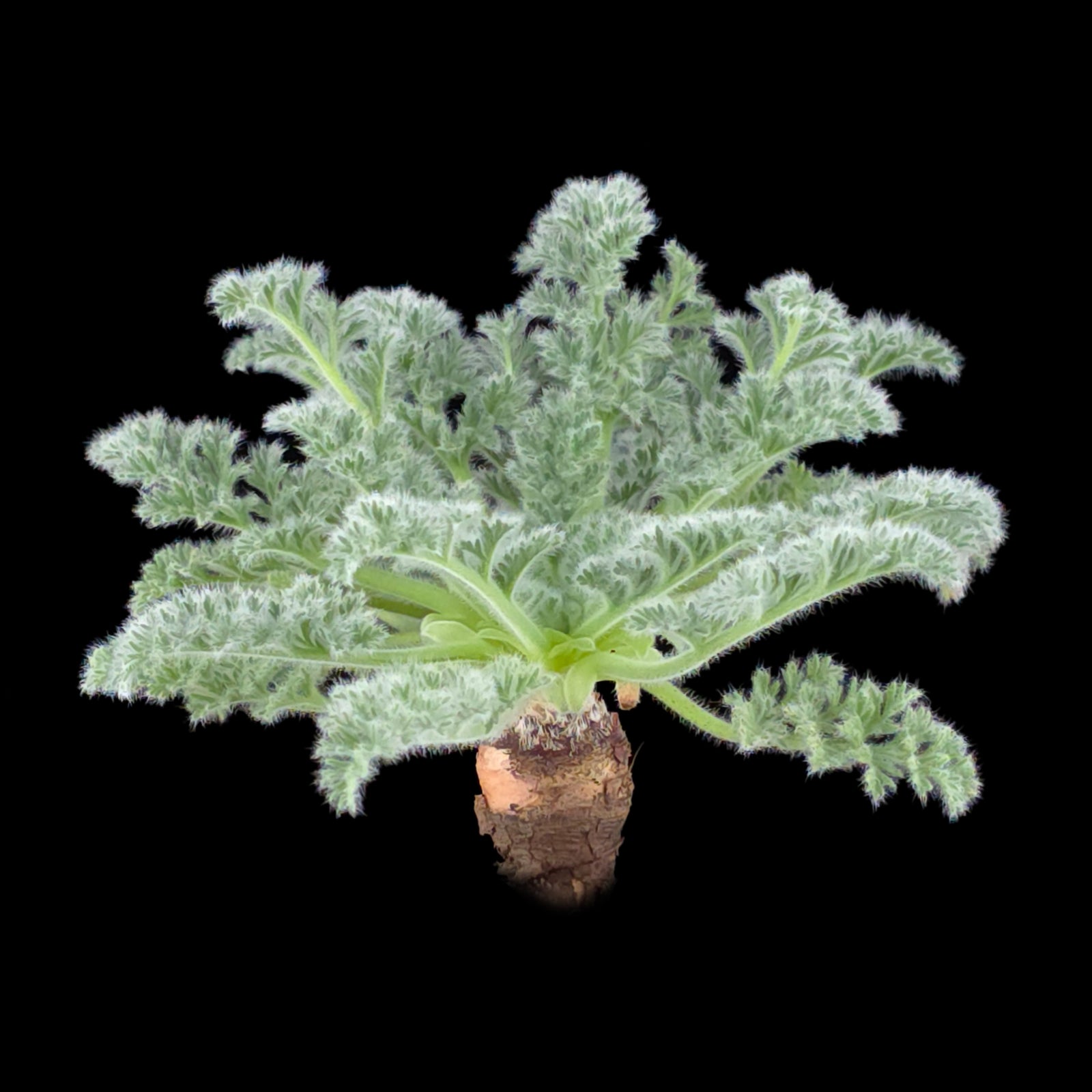
The swollen base, or caudex, is not just a visual feature. It is central to how the plant survives.
Water is stored in this structure during the growing season and used during dormancy. This allows the plant to tolerate extended dry periods without stress.
Because of this, the plant often needs less water than expected — particularly when it is not actively growing.
This is why overwatering during dormancy is such a common issue. The plant is not using the water being supplied.
Why It Appears Delicate
The foliage of Pelargonium appendiculatum is finely divided and softly textured. It gives the impression of a fragile plant.
In practice, the opposite is true.
When grown in line with its seasonal cycle, it is a resilient species. Most losses are not due to sensitivity, but to mismatch between care and timing.
Growth Is Not Constant
There is an expectation that plants should grow steadily if conditions are “correct”. This species does not follow that pattern.
Growth is seasonal, and there will be periods where the plant does very little. This is normal.
In many cases, the plant is judged during its dormant phase rather than its active one.
This leads to unnecessary adjustments, which often disrupt the plant’s natural rhythm.
What Most People Get Wrong
- Trying to maintain growth during summer
- Watering based on habit rather than season
- Interpreting dormancy as decline
These are not complex mistakes. They are simply the result of applying a general approach to a plant that requires a specific one.
Final Notes
Pelargonium appendiculatum is a plant that becomes easier over time, not because it changes, but because it becomes better understood.
Once its seasonal cycle is recognised, its behaviour is consistent. Growth occurs when conditions allow, and pauses when they do not.
It is not a plant that needs more attention. It is a plant that needs better timing.
Further Reading
For practical growing instructions, see the full care guide:
Pelargonium appendiculatum Care Guide
Plants are also available here: