Air plants need water, but there is no single watering schedule that is correct for every Tillandsia.
A plant growing outdoors during a hot Australian summer may dry within an hour. The same plant kept indoors during winter may remain damp for much of the day. Species, temperature, humidity, light, airflow and the type of display all affect how frequently an air plant should be watered.
For many Tillandsia, watering once or twice a week is a reasonable starting point. It should not be treated as an unchangeable rule. The plant should be checked and its watering adjusted according to how quickly it dries and how it responds.
How Often Should You Water an Air Plant?
As a general starting point:
- Water more frequently during warm, bright and dry conditions.
- Water less frequently during cool, humid or dull conditions.
- Water soft, green Tillandsia more regularly than heavily silver species.
- Reduce watering when plants are taking longer to dry.
- Never water again simply because a particular day of the week has arrived.
Many air plants are watered thoroughly once or twice each week during active growth. Additional misting may be useful in hot, dry conditions. Plants growing outside with strong airflow may require water more often than plants kept inside.
The important question is not only how often the plant is watered. It is also how thoroughly it is watered and how quickly it dries afterwards.
Why Air Plants Cannot All Follow the Same Schedule
Tillandsia is a large and diverse group. Different species naturally grow in environments ranging from humid forests to exposed rocks and seasonally dry woodlands.
The colour, texture and arrangement of the leaves provide useful clues about a plant’s natural adaptations. These clues help determine how regularly the plant should be watered and how quickly it needs to dry.
Fine-Leaved and Caulescent Tillandsia
Some Tillandsia produce narrow leaves along an elongated stem rather than forming a broad, compact rosette. These plants may dry rapidly when mounted in bright, breezy conditions.
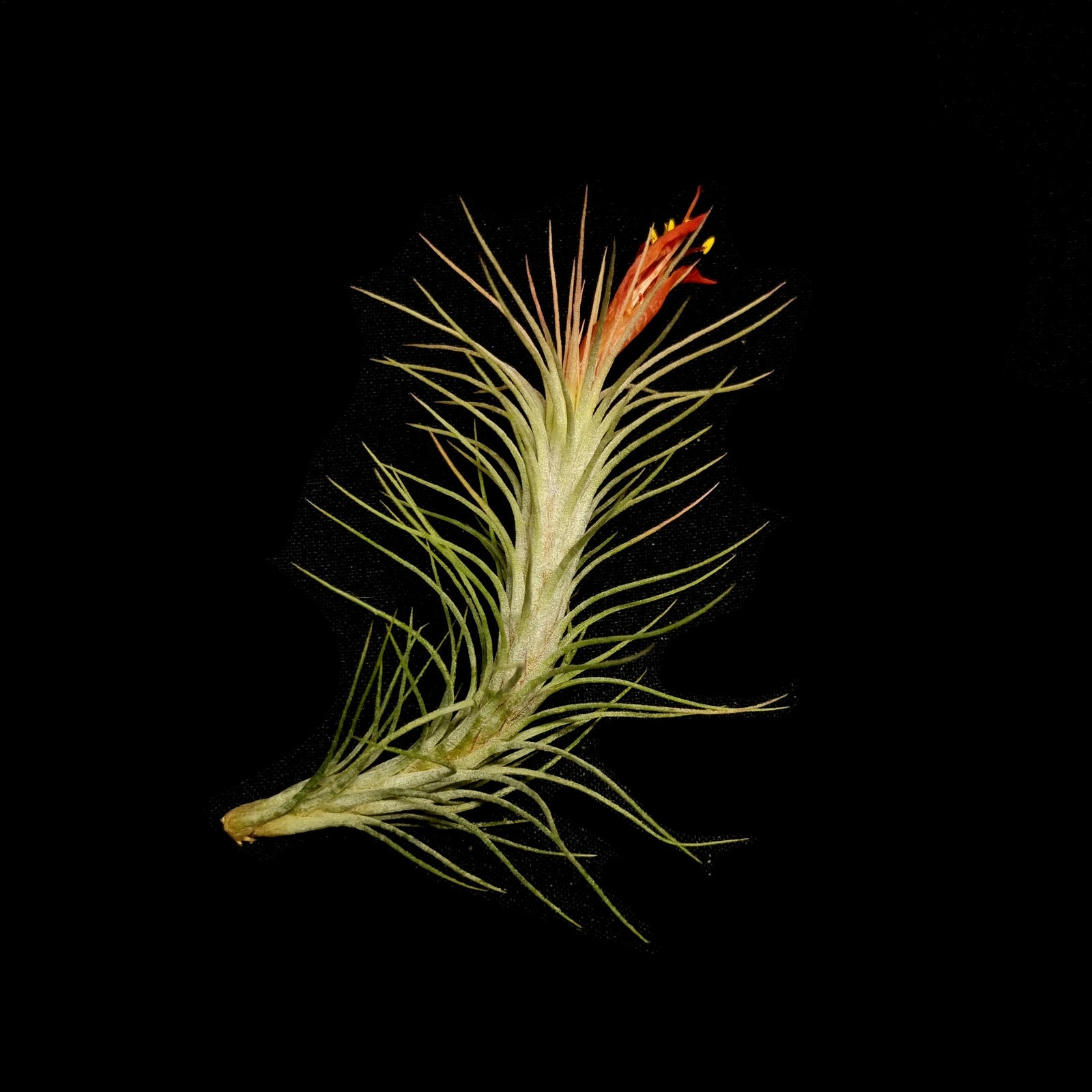
Tillandsia funckiana produces narrow, almost needle-like foliage. It naturally grows on exposed rocky surfaces with strong light and brisk air movement. It benefits from regular watering during active growth, but its mounted stems should be allowed to dry fully between waterings.
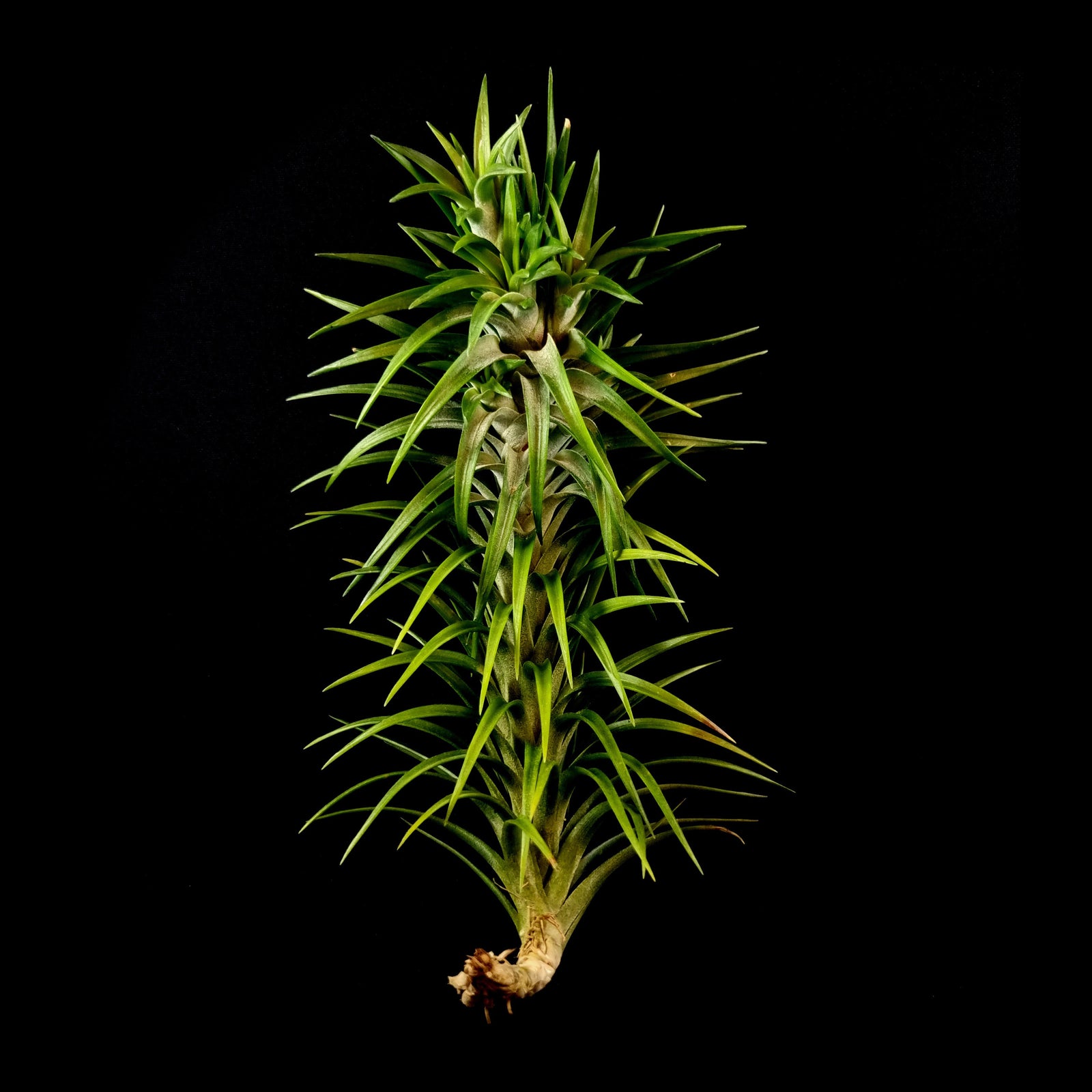
Tillandsia araujei also develops along an elongated stem. It gradually produces offsets that form dense, column-like clusters. Individual stems may dry quickly, while an established clump can retain moisture and dead material between its branches.
As these plants grow, watering must be adjusted to the entire clump rather than the appearance of a single exposed stem. Good air movement becomes increasingly important.
Silver and Heavily Trichomed Tillandsia
The pale or silver appearance of many Tillandsia is produced by specialised scales called trichomes. These structures help the plant capture water while also reflecting some intense light from the leaf surface.
Silver species are often adapted to brighter and seasonally drier habitats. They may tolerate longer periods between waterings, but they still require water.
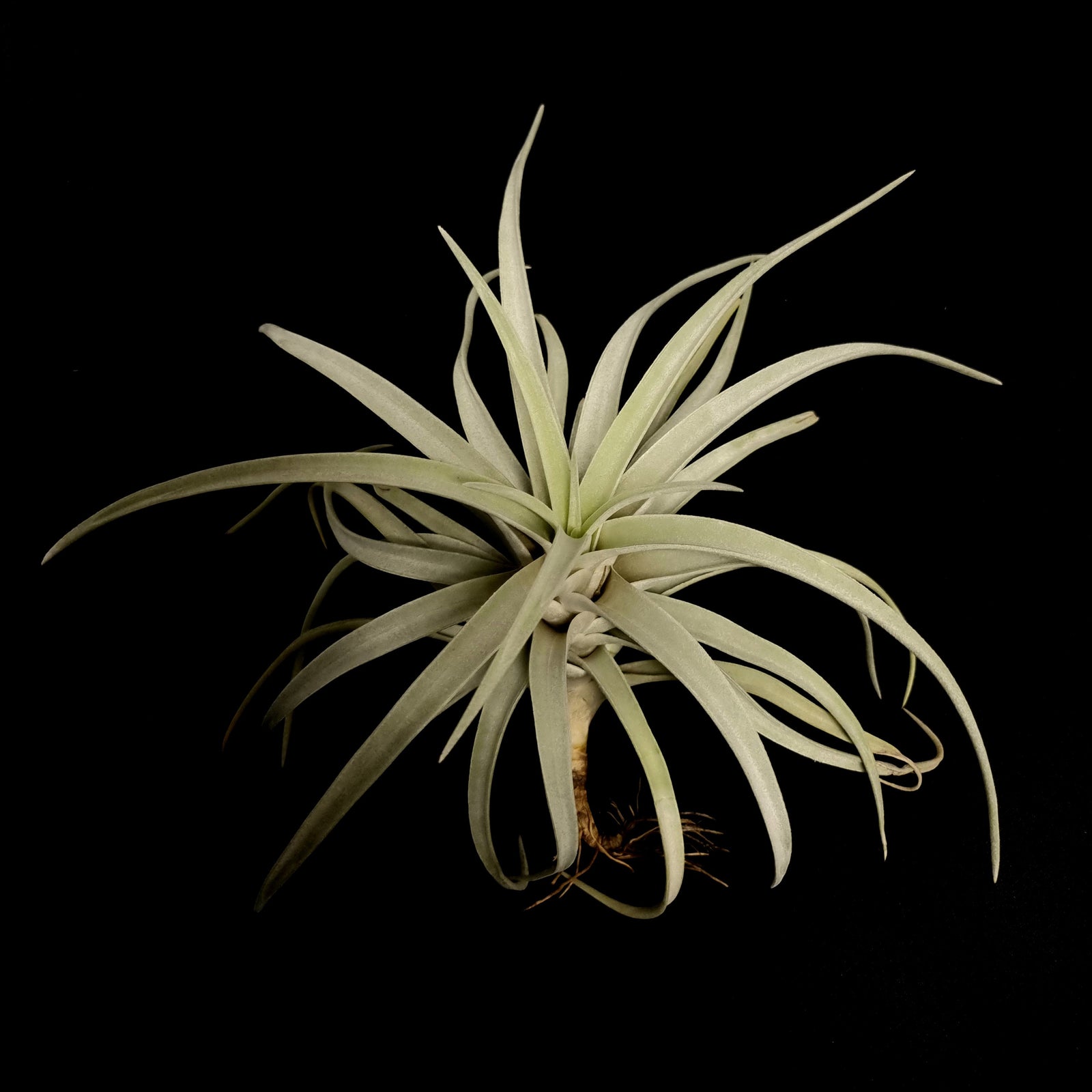
Tillandsia harrisii has thick, soft leaves covered with dense silvery trichomes. It comes from comparatively dry habitats and tolerates lower humidity, provided it receives adequate water followed by thorough drying.
Tillandsia ehlersiana is another heavily trichomed species from semi-arid conditions. It is particularly drought-tolerant and should not be kept constantly damp. Regular misting may be useful during warm weather, but watering should be reduced when conditions become cooler and drying slows.
These plants may appear grey or dry even when they are perfectly healthy. Their silvery colour is a normal feature of the foliage and should not be treated as an automatic sign that they need more water.
Should You Soak, Rinse or Mist Air Plants?
Soaking, rinsing and misting can all be useful. The best method depends on the species, the growing environment and how easily the plant can drain.
Soaking
Soaking allows a plant to become thoroughly wet and can be useful for many open-growing Tillandsia.
Place the plant in room-temperature water for approximately 20 to 30 minutes. Remove it, shake away the excess water gently and allow it to drain completely.
Soaking is not automatically the best method for every plant. Use extra caution with:
- Bulbous Tillandsia
- Very dense rosettes
- Large established clumps
- Plants flowering or holding water around an inflorescence
- Plants being grown in cool conditions
Do not assume that a longer soak is always better. Leaving an air plant submerged overnight may create problems, particularly if water becomes trapped or the plant is slow to dry.
Rinsing
Rinsing a Tillandsia thoroughly under gentle running water is a practical alternative to soaking. It wets the leaves well without leaving the plant submerged for an extended period.
Turn the plant as it is rinsed so water reaches the entire leaf surface. Afterwards, drain it thoroughly and place it somewhere with good airflow.
Rinsing is particularly useful when you want to hydrate a plant while retaining more control over how much water enters its base.
Misting
Misting is useful for providing supplementary water between more thorough waterings. It can also suit plants that are permanently mounted and difficult to submerge.
A very light mist that evaporates immediately may not supply enough water to hydrate a dry plant. When misting is the main watering method, wet the leaves thoroughly rather than merely spraying the air around them.
Fine-leaved, mounted species can be watered effectively by thorough misting, provided the entire plant receives water and is not allowed to remain chronically dry.
Daily misting is not universally necessary. In a warm, bright and well-ventilated position, regular misting may work well. In a cool room with limited airflow, frequent misting may keep the plant damp for too long.
How Long Should an Air Plant Take to Dry?
An air plant should not remain wet for most of the day or overnight. After watering, it should drain promptly and dry within a few hours.
Drying time varies with:
- Temperature
- Humidity
- Air circulation
- Leaf density
- The size of the plant or clump
- Whether water is trapped inside the base
- The material and shape of its display
If a plant is still wet many hours after watering, improve the airflow, move it out of an enclosed display or reduce the amount and frequency of watering.
Large clumps require particular attention. An established cluster may feel dry on the exposed surface while remaining wet between its stems. Remove completely dead material occasionally and allow air to move through the entire clump.
Cooler weather also requires particular attention. A plant that dries rapidly in summer may remain damp for much longer during winter.
How to Dry an Air Plant After Watering
Correct drying is one of the most important parts of watering Tillandsia.
- Remove the plant from the water.
- Hold it securely and shake away excess water gently.
- Turn it so water can drain from between the leaves.
- Place it in a bright, shaded position with good airflow.
- Allow it to dry before returning it to a decorative holder.
Plants are often placed upside down temporarily after watering. This can help water drain from open rosettes, although the plant does not need to remain upside down permanently.
Heavily trichomed plants should be handled gently. Rough handling can damage the trichomes and change the appearance of the leaves.
When Is the Best Time to Water Air Plants?
Morning is usually the most practical time to water Tillandsia. The plant then has warmth, light and air movement available to help it dry.
Watering late in the evening can be risky during cool weather because the plant may remain wet overnight. This is particularly important for plants growing indoors, inside sheltered displays or in areas with limited air circulation.
During very hot weather, avoid leaving a freshly watered plant in intense sunlight. Wet leaves combined with excessive heat can increase stress.
How to Water Air Plants During an Australian Summer
Australian summer conditions vary considerably. A Tillandsia grown in humid coastal Queensland will experience different drying conditions from one grown in inland New South Wales, South Australia or Victoria.
During hot and dry periods:
- Check plants more frequently.
- Increase watering if leaves are becoming dry or tightly folded.
- Provide additional misting where plants dry rapidly.
- Protect softer species from harsh afternoon sun.
- Do not leave plants against hot glass or metal.
- Continue allowing plants to drain after watering.
Plants mounted in exposed positions may dry particularly quickly. Narrow-leaved species can lose moisture rapidly in hot wind even when they are naturally adapted to bright, open habitats.
Heat does not always mean that a plant requires full soaking every day. Observe how quickly it dries and whether its leaves remain firm.
How to Water Air Plants During Winter
Tillandsia generally dry more slowly during winter because temperatures are lower and days are shorter.
During cool weather:
- Reduce watering where plants remain damp for longer.
- Water during the warmer part of the morning.
- Keep plants away from cold, stagnant positions.
- Ensure water does not remain trapped inside dense plants.
- Avoid returning damp plants to glass containers.
- Protect plants from frost.
Drought-tolerant, heavily trichomed species usually require less frequent watering when temperatures fall and growth slows.
Indoor heating may produce the opposite problem by creating warm, very dry air. Plants close to a heater may still dehydrate quickly, although placing them directly in hot airflow is not recommended.
The plant’s drying time remains the best guide.
Can You Use Tap Water on Air Plants?
Tap water is suitable for Tillandsia in many parts of Australia. However, water chemistry varies between regions and properties.
Rainwater is an excellent choice where it can be collected cleanly. Filtered water may also be useful where tap water contains a high level of dissolved minerals.
Signs that mineral or fertiliser residue may be accumulating include:
- Persistent white deposits on the leaves
- Dry brown tips despite adequate watering
- Leaf damage developing after fertilising
If accumulation is suspected, rinse the plant thoroughly with clean water and reduce fertiliser use.
Avoid water that has passed through a domestic salt-based water softener. These systems may add sodium, which is not suitable for repeated use on plants.
Should You Add Fertiliser to the Water?
Tillandsia can be fertilised during active growth, but they need only a weak solution.
Use a fertiliser intended for Tillandsia or bromeliads and follow the product directions. When uncertain, a weaker solution is safer than a stronger one.
Do not add fertiliser to every watering unless the fertiliser has specifically been formulated and labelled for that use.
Excess fertiliser can burn the leaves and contribute to brown tips. Fertiliser should support healthy growth; it should not be used as a treatment for dehydration, rot or damaged leaves.
How Can You Tell When an Air Plant Needs Water?
A Tillandsia may require more water when:
- The leaves feel less firm than usual.
- The leaf edges curl inward unexpectedly.
- The plant feels unusually light.
- Dry brown tips are increasing.
- Normally open leaves become tightly folded.
- Growth appears dull or dehydrated.
These signs must be interpreted according to the species. Some Tillandsia naturally have curved, narrow or tightly arranged foliage.
Likewise, the naturally grey appearance of a heavily trichomed plant is not a sign that it is dry or unhealthy. Its silvery coating is a normal and useful feature of the foliage.
How Can You Tell If an Air Plant Is Being Overwatered?
Overwatering is not simply the act of watering frequently. The larger problem is a plant remaining wet for too long.
Warning signs include:
- A soft or mushy base
- Darkening around the centre
- Central leaves becoming loose
- A musty or unpleasant smell
- Rapid collapse rather than gradual drying
If these symptoms appear, stop watering temporarily, remove the plant from any enclosed display and allow it to dry with good airflow.
For a more detailed diagnosis, see our guide to why air plants turn brown, black or soft.
Watering Air Plants in Decorative Displays
Tillandsia can be displayed on cork, timber, rocks, wire, shells and open glass containers. The display should not prevent proper watering and drying.
Where possible, remove the plant from its holder before watering. Let it dry completely before replacing it.
Avoid displays that:
- Hold water around the base
- Prevent air from moving around the leaves
- Make the plant impossible to remove
- Keep wet moss against the plant
- Enclose the plant inside a sealed terrarium
Elongated and clustering species are particularly well suited to cork, timber or stone because their natural growth can continue along the mount. The mount should still allow the whole plant to be watered and should not hold moisture against the stems.
A display can look dry at the front while still holding water underneath the plant. Check the actual contact points rather than only the visible leaves.
Frequently Asked Questions
How often should I soak my air plant?
For many common Tillandsia, a thorough watering once or twice each week is a reasonable starting point. Frequency must be adjusted for the species, temperature, humidity, light and airflow. Not every Tillandsia should be soaked.
Is misting enough for an air plant?
Misting can be enough when the plant is wetted thoroughly and watered frequently enough for its conditions. An occasional light spray is unlikely to hydrate a very dry plant fully.
Can I leave an air plant soaking overnight?
It is generally unnecessary and can increase the risk of water becoming trapped. A shorter, thorough watering followed by prompt drying is safer for most plants.
Should air plants be placed upside down after watering?
Temporarily turning an air plant upside down can help water drain from between its leaves. It is particularly useful for rosette-forming and bulbous plants. Good airflow remains essential.
Can I water an air plant while it is flowering?
Yes, but avoid leaving water trapped around the flowers or inflorescence. Rinsing or carefully wetting the foliage may be preferable to submerging the flower.
Why is my air plant still drying out when I water it weekly?
The plant may not be receiving enough water during each watering, or it may be drying very rapidly because of heat, low humidity or strong airflow. The species may also require more regular moisture than your other Tillandsia.
Why did my air plant rot even though I only watered it once a week?
Even weekly watering can cause rot if the plant remains wet for too long. Cool temperatures, poor airflow, trapped water and enclosed displays can all slow drying.
The Simple Rule
Water the plant thoroughly enough to hydrate it, then allow it to dry properly.
Do not rely entirely on a weekly schedule. Learn the normal appearance of the species, check how quickly it dries and adjust its care as the seasons change.
For broader information about light, temperature, fertilising and displaying Tillandsia, read our complete Air Plant Care Guide.
You can also explore our current collection of Tillandsia and air plants available online in Australia.