A brown leaf tip does not necessarily mean that an air plant is dying. Tillandsia naturally lose older leaves, develop small marks and respond visibly to changes in water, light, temperature and airflow.
The location and texture of the damaged area are often more useful than its colour. Dry brown tips usually indicate a very different problem from a soft, dark centre.
This guide explains the most common causes of brown, black or curling Tillandsia leaves, how to recognise rot and what you can do to help a struggling air plant recover.
Is My Air Plant Actually Dying?
Begin by examining the plant closely.
A living Tillandsia should normally have a firm centre and leaves that remain securely attached. The plant may feel slightly dry between waterings, but it should not collapse when handled.
Signs that the plant is probably still healthy include:
- One or two dry brown leaf tips
- An older lower leaf turning brown
- Slight curling during hot or dry weather
- Minor marks on individual leaves
- A flower spike gradually drying after flowering
- The mother plant slowly declining while producing pups
More concerning signs include:
- A soft or mushy base
- Blackening that begins in the centre
- Several central leaves pulling out easily
- An unpleasant smell
- Rapid leaf loss
- Damage spreading quickly through the plant
The first group is usually manageable. The second group may indicate rot or serious damage to the growing point.
Why Are the Tips of My Air Plant Turning Brown?
Dry brown tips are one of the most common Tillandsia problems. They generally develop when the ends of the leaves lose moisture faster than the plant can replace it.
Insufficient Water
An air plant may become dehydrated when it is watered too lightly, too infrequently or kept in a particularly warm and dry position.
Possible signs include:
- Dry brown leaf tips
- Leaves curling more tightly than usual
- Leaves folding inward
- A dull or brittle appearance
- The plant feeling unusually light
A light mist may wet the surface without providing enough water to fully hydrate a dry plant. However, this does not mean that every Tillandsia should automatically be soaked for hours.
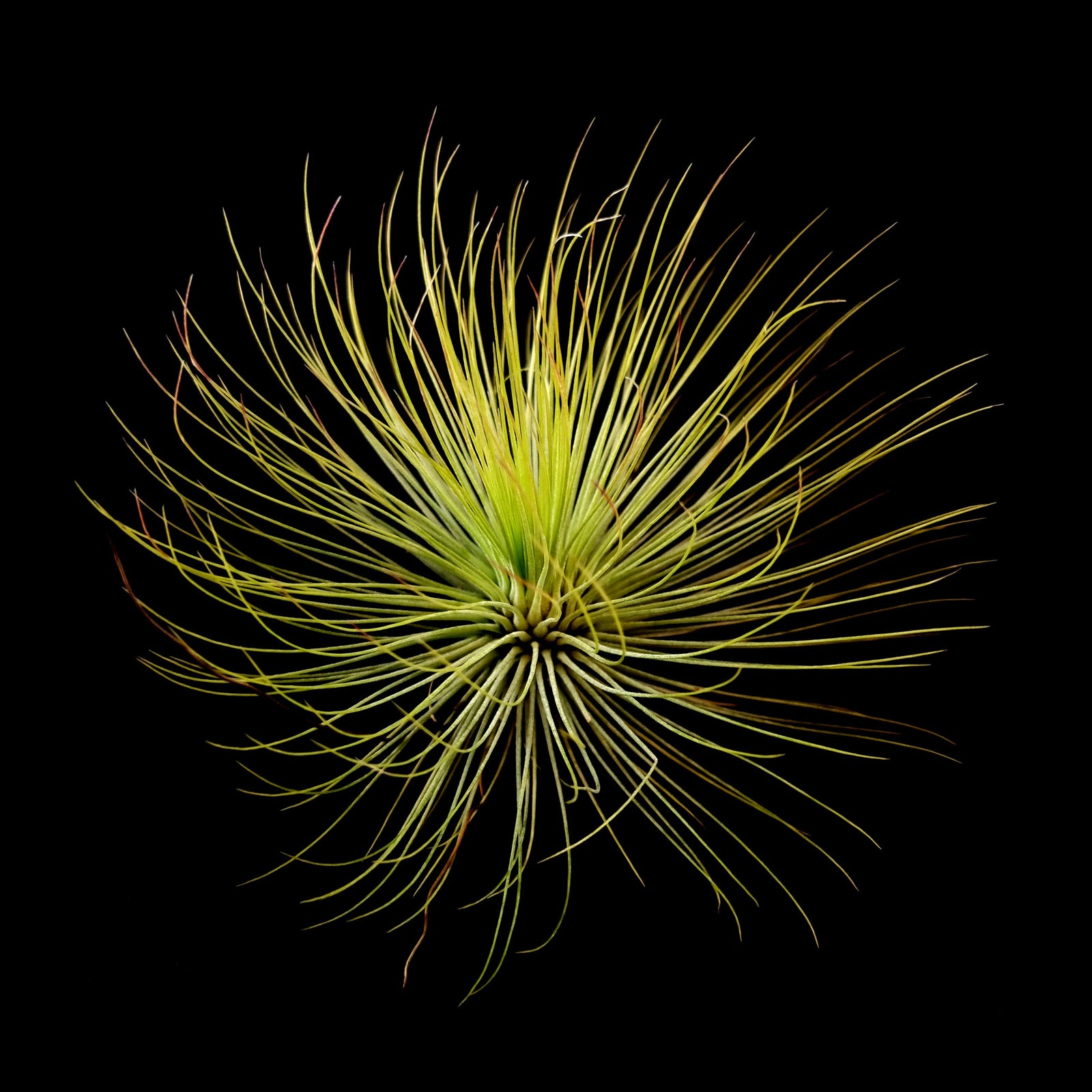
Different species have different moisture requirements. Soft, green species with fewer visible trichomes generally come from more humid environments. Tillandsia andreana, for example, has fine green leaves and appreciates regular moisture, warmth and good airflow.
Silver or heavily textured Tillandsia are generally better adapted to brighter and drier conditions. The compact hybrid Tillandsia caliginosa × crocata has fine silvery foliage inherited from parents that grow in relatively dry habitats with strong light and excellent air circulation.
The two plants should not necessarily receive identical treatment simply because they are both Tillandsia. Increase water gradually and observe how quickly each plant dries.
Hot, Dry Conditions
Australian summer conditions can dehydrate Tillandsia surprisingly quickly. Plants near a hot window, beneath a metal verandah or in the path of dry wind may develop brown tips even when they are being watered regularly.
Plants grown outdoors may need more frequent watering during hot weather. Indoor plants can also dry quickly when exposed to air conditioning, heating or strong afternoon sun through glass.
Move the plant into a position with good light but protection from intense heat. Review its watering according to the actual conditions rather than relying on a fixed weekly schedule.
Water Quality and Fertiliser Residue
Brown tips can also develop after minerals or fertiliser salts accumulate on the leaves.
Tillandsia absorb water and nutrients through their leaf surfaces. Repeated use of strongly mineralised water or excessive fertiliser may damage the delicate leaf tissue.
Rainwater is an excellent option where it can be collected safely. Ordinary tap water is suitable in many areas, although water quality varies considerably across Australia.
If fertiliser may be responsible:
- Stop fertilising temporarily
- Rinse the plant thoroughly with clean water
- Resume feeding only after healthy growth is visible
- Use a fertiliser suitable for bromeliads or Tillandsia
- Apply it at a weak concentration
More fertiliser will not repair a stressed plant. Tillandsia generally require only modest feeding.
Natural Ageing
The oldest leaves at the base of a Tillandsia will eventually dry and turn brown. This is part of normal growth.
A completely dry lower leaf can be removed gently if it comes away easily. Do not pull firmly attached leaves from the plant, as this can damage healthy tissue around the base.
Why Is My Air Plant Turning Black or Mushy?
A soft, dark or collapsing centre is much more serious than a dry brown tip. It often indicates rot.
Rot develops when the plant remains wet for too long, particularly when moisture is trapped between the leaves and airflow is poor. Cool conditions make the problem worse because the plant dries more slowly.
Common causes include:
- Water remaining in the centre of the plant
- Watering late in cool weather
- Returning a wet plant to an enclosed display
- Poor air circulation
- Keeping the plant inside a closed terrarium
- Soaking bulbous Tillandsia without allowing them to drain properly
- Watering too frequently during winter
- Dense clumps retaining dead leaves and moisture
Tillandsia need water, but they also need to dry. Frequent watering can work well where warmth, light and air movement allow the plant to dry promptly. The same watering routine may cause rot in a cool indoor position.
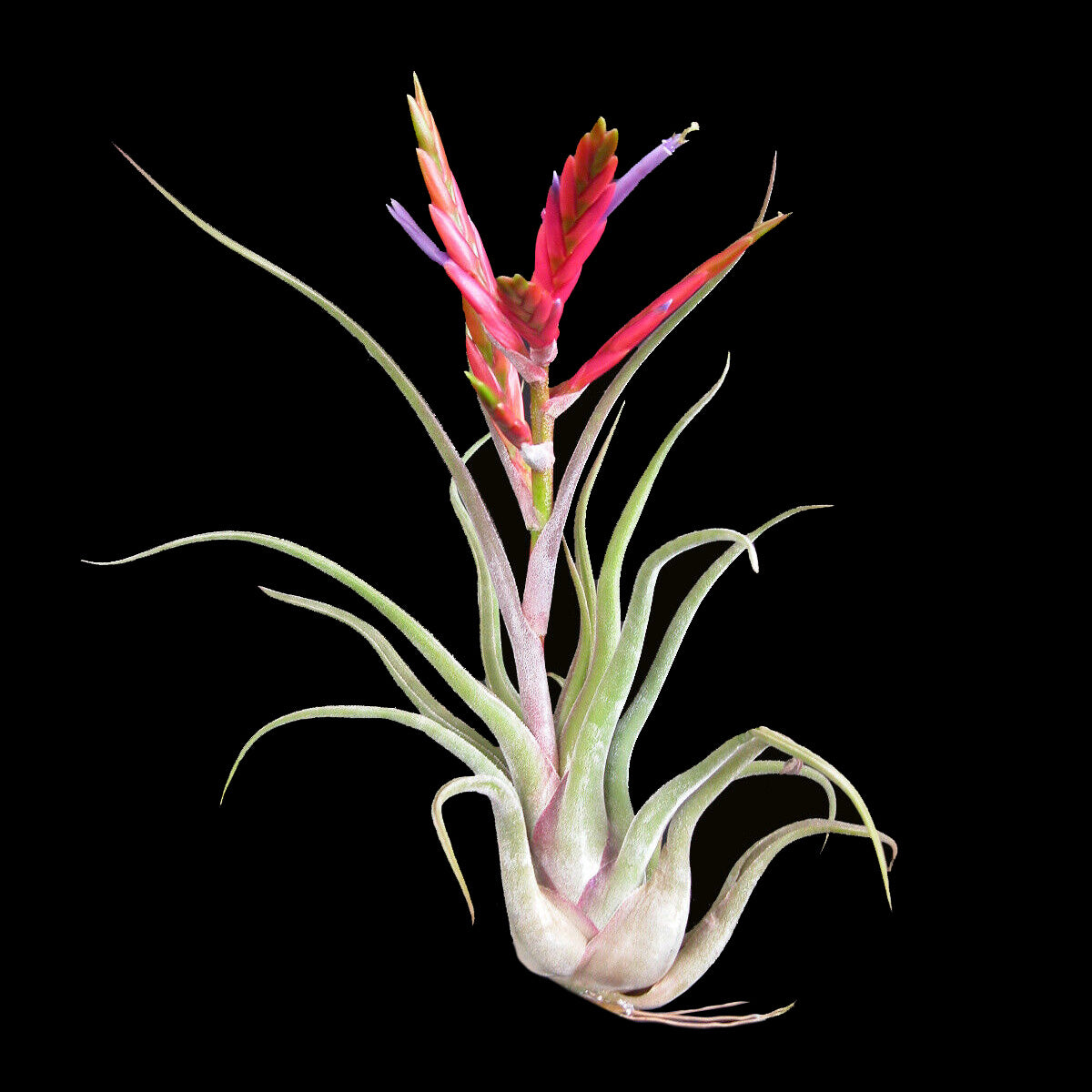
Bulbous species require particular attention because water can remain trapped inside their swollen bases. Tillandsia caput-medusae is a good example. Its sculptural, bulbous base and twisting leaves make it an attractive plant, but it must be drained carefully after watering and should not be returned wet to an enclosed holder.
The Leaf-Pull Test
Very gently hold one of the central leaves and apply a small amount of pressure.
If the leaf remains firmly attached, the growing point may still be sound. If several central leaves slide out easily and their bases are black or soft, the centre of the plant has probably rotted.
Avoid repeatedly pulling at the plant to test it. One careful check is sufficient.
Can a Rotting Air Plant Be Saved?
A Tillandsia with minor outer damage may recover if its growing point is still healthy. Once the central growing point has completely rotted, recovery is unlikely.
If rot appears to be limited:
- Remove the plant from any enclosed holder or display.
- Gently remove material that is completely loose and dead.
- Allow the plant to dry in a bright, shaded position with good airflow.
- Do not return it to an enclosed container.
- Resume watering cautiously only after it has dried completely.
- Monitor the centre for further softening or discolouration.
Do not apply heavy fertiliser to a rotting or severely stressed plant. Fertiliser cannot replace damaged tissue and may create additional stress.
A mature plant may occasionally have living pups around its base even when the original growing point has been damaged. Inspect the plant carefully before discarding it.
Why Are My Air Plant’s Leaves Curling?
Some Tillandsia naturally have curved, twisted or spiralling leaves. Curling is not automatically a sign that something is wrong.
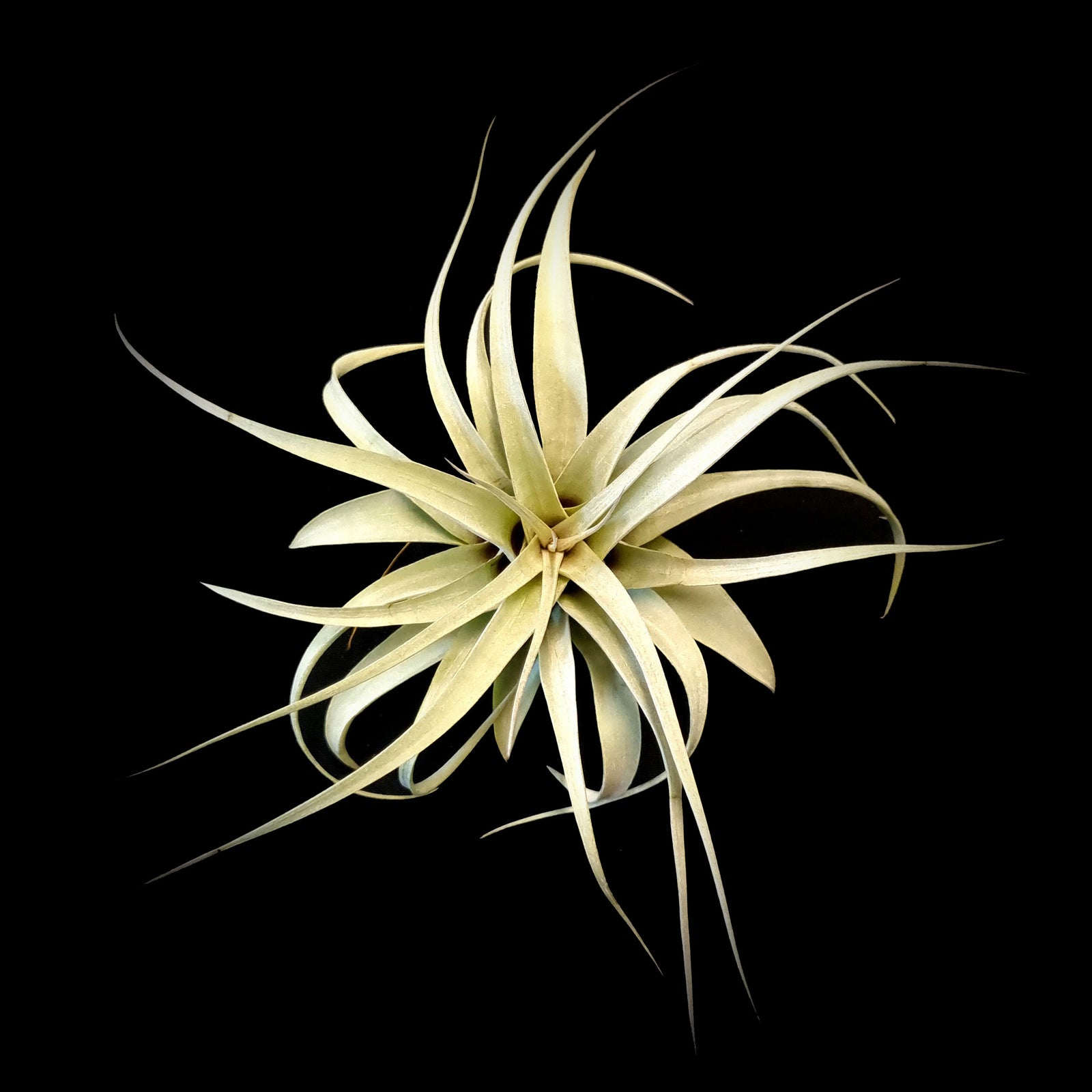
Tillandsia xerographica naturally forms a large rosette of broad, silvery leaves that curl and spiral as the plant matures. Its shape is part of the plant’s normal appearance rather than evidence that it is dying.
Some naturally curly Tillandsia may become more tightly curled as they dry and more open after receiving water. Unexpected curling in a normally straighter plant, however, may indicate dehydration.
Look for other signs such as:
- Dry brown tips
- Leaves folding lengthways
- A dull or brittle surface
- A noticeable reduction in firmness
If the plant is otherwise firm and healthy, provide a thorough watering appropriate for the species and then allow it to dry completely. Improved leaf firmness or a more open shape may indicate that dehydration was contributing to the curling.
Curling alone should not be used as a universal watering test. The normal shape of the species must also be considered.
Why Does My Air Plant Have Brown or Bleached Patches?
Localised tan, brown or pale patches are often caused by sudden exposure to excessive sun or heat.
A plant grown in shade can burn when moved directly into strong sunlight. Sunlight passing through glass can also create very hot conditions around the leaves.
Sunburn usually affects the most exposed side of the plant. The damaged tissue will not return to green, but the plant can continue growing if the centre remains healthy.
Move the plant to bright, filtered light and introduce any stronger light gradually. Morning sun is generally gentler than intense afternoon sun, although local conditions and the species being grown must always be considered.
Silver Tillandsia such as Tillandsia xerographica and Tillandsia caliginosa × crocata are generally better equipped for strong light than a soft green species such as Tillandsia andreana. Even light-tolerant plants can burn when their exposure is increased too suddenly.
Physical bruising can produce similar marks. If the damage remains dry and does not spread, it may simply be a permanent scar.
Is Browning After Flowering Normal?
Tillandsia flower only once from each individual growing point. After flowering, the mother plant usually begins producing offsets known as pups.
The old flower spike will eventually turn brown and dry. The mother plant may then decline slowly as the pups develop. This process can take many months and should not be confused with sudden rot.
A plant following its normal flowering cycle usually:
- Remains reasonably firm
- Declines gradually rather than collapsing suddenly
- Produces one or more pups near its base
- Develops a dry flower spike
- Loses older leaves over time
Leave the pups attached while they are small. They can remain together and form an attractive clump, or they can be separated later once they are large enough to handle safely.
Should I Cut Brown Tips Off an Air Plant?
Brown tips are dead tissue and will not become green again. They can be left in place or trimmed for appearance.
If trimming them:
- Use clean, sharp scissors
- Remove only the dry tissue
- Follow the natural shape of the leaf
- Avoid cutting into healthy green tissue
- Do not remove large numbers of leaves unnecessarily
Trimming improves appearance but does not correct the original cause. Watering, light, temperature and airflow should still be reviewed.
How to Rehydrate a Dry Air Plant
A dry but firm Tillandsia can often recover.
Water it thoroughly using a method suitable for the species. Many common Tillandsia can be submerged or rinsed, but bulbous species and very densely formed plants require particular care because water can remain trapped inside them.
After watering:
- Shake away excess water gently.
- Position the plant so trapped water can drain.
- Place it somewhere with good air movement.
- Allow it to dry completely before returning it to its display.
Do not leave a severely dehydrated plant submerged overnight. A long soak is not necessarily better and may create a new problem, particularly in cool conditions.
Recovery may be gradual. Existing brown tips will remain brown, but healthier new growth indicates that the plant has stabilised.
How to Prevent Brown Leaves and Rot
Most Tillandsia problems can be prevented by balancing four things: water, light, temperature and airflow.
Adjust Watering to the Conditions
Avoid watering purely according to the calendar. A plant may dry rapidly during a hot Australian summer but remain wet much longer during cool winter weather.
Check the plant and its environment before watering again.
Allow the Plant to Dry
Drain the plant well after watering and provide moving air around the leaves. Pay particular attention to bulbous plants, dense clumps and plants held in narrow containers.
Provide Suitable Light
Most Tillandsia grow well in bright, filtered light. Some silver, heavily trichomed species tolerate stronger light than soft green species, but plants should be acclimatised gradually.
Good light supports healthy growth and helps plants dry efficiently. Deep shade combined with frequent watering is a common cause of decline.
Avoid Closed Terrariums
An open glass container can be used as a display, provided the plant is removed for watering and allowed to dry before being returned.
Closed terrariums are generally unsuitable for Tillandsia because they restrict airflow and hold humidity around the plant.
Keep Displays Practical
Shells, timber, wire and decorative holders can all be used, but the plant must still be removable or accessible for watering. Avoid positions where water collects around the base.
If glue is used for mounting, use only a small amount of a suitable product and do not cover the growing point or base of the plant.
Inspect the Centre Regularly
Brown tips are easy to notice, but the centre of the plant is more important. Check that it remains firm, clean and free from trapped debris.
Removing completely dead material from established clumps can improve airflow and make problems easier to detect.
Frequently Asked Questions
Do brown air plant leaves turn green again?
No. Once leaf tissue has died and turned brown, it will not become green again. Correcting the cause protects the remaining plant and allows healthier new growth to develop.
Is an air plant dead if the tips are brown?
Usually not. Brown tips are common and may be caused by dehydration, heat, mineral accumulation, physical damage or natural ageing. Check whether the centre remains firm and healthy.
How can I tell if my air plant is rotten?
Rotten tissue is generally dark, soft or mushy. Central leaves may pull away easily, and the plant may have an unpleasant smell. Dry brown tissue is not the same as rot.
Should I mist a brown air plant every day?
Not automatically. Daily misting may be useful in some warm, dry and well-ventilated environments, but it can be harmful where the plant remains wet. Water according to the species and growing conditions.
Can an air plant recover after turning brown?
A plant with dry tips or limited leaf damage can often recover. A plant with complete rot through its central growing point is unlikely to survive, although pups around the base may remain healthy.
Why did my air plant rot after soaking?
The soaking itself may not have been the only cause. Water may have remained trapped inside the plant, or the plant may have dried too slowly because of cool temperatures, poor airflow or an enclosed display.
The Most Important Distinction
Dry and firm usually suggests dehydration, ageing or environmental damage.
Dark, soft and loose usually suggests rot.
A Tillandsia with a firm centre has a reasonable chance of recovery. Correct the conditions gradually, allow the plant to dry properly and judge its progress by the health of its new growth rather than the appearance of old damage.
For broader information about light, watering, fertilising and displaying Tillandsia, read our complete Air Plant Care Guide.
You can also explore our current range of Tillandsia and air plants available online in Australia.