Flowering is one of the most interesting stages in the life of a Tillandsia. Some species develop colourful flower spikes, while others produce small flowers that can be easy to miss. The leaves of certain plants also change colour as flowering approaches.
After flowering, the individual Tillandsia growth point does not flower again. It normally begins producing offsets, commonly called pups, while the original plant gradually declines.
This does not mean that the entire plant has suddenly died. In a healthy Tillandsia, flowering is usually the beginning of the next generation.
Do Air Plants Flower?
Yes. All mature Tillandsia are capable of flowering, although the appearance and timing of the flowers vary considerably between species.
Tillandsia flowers may be:
- Violet, purple, pink, red, yellow, greenish or white
- Produced singly or in groups
- Held close to the centre of the plant
- Carried on a tall or branched flower spike
- Short-lived or presented over an extended period
- Accompanied by colourful leaves or floral bracts
The showiest part of a flowering Tillandsia is not always the flower itself. Colourful bracts and blushing foliage may remain attractive much longer than the individual flowers.
How Can You Tell When an Air Plant Is About to Flower?
The signs depend on the species, but common changes include:
- Red, pink or orange colour developing in the central leaves
- A flower spike emerging from the centre
- The plant becoming more upright or compact
- Small buds appearing between the leaves
- Growth slowing as energy is directed into flowering
Some forms of Tillandsia ionantha are particularly well known for changing colour before flowering.
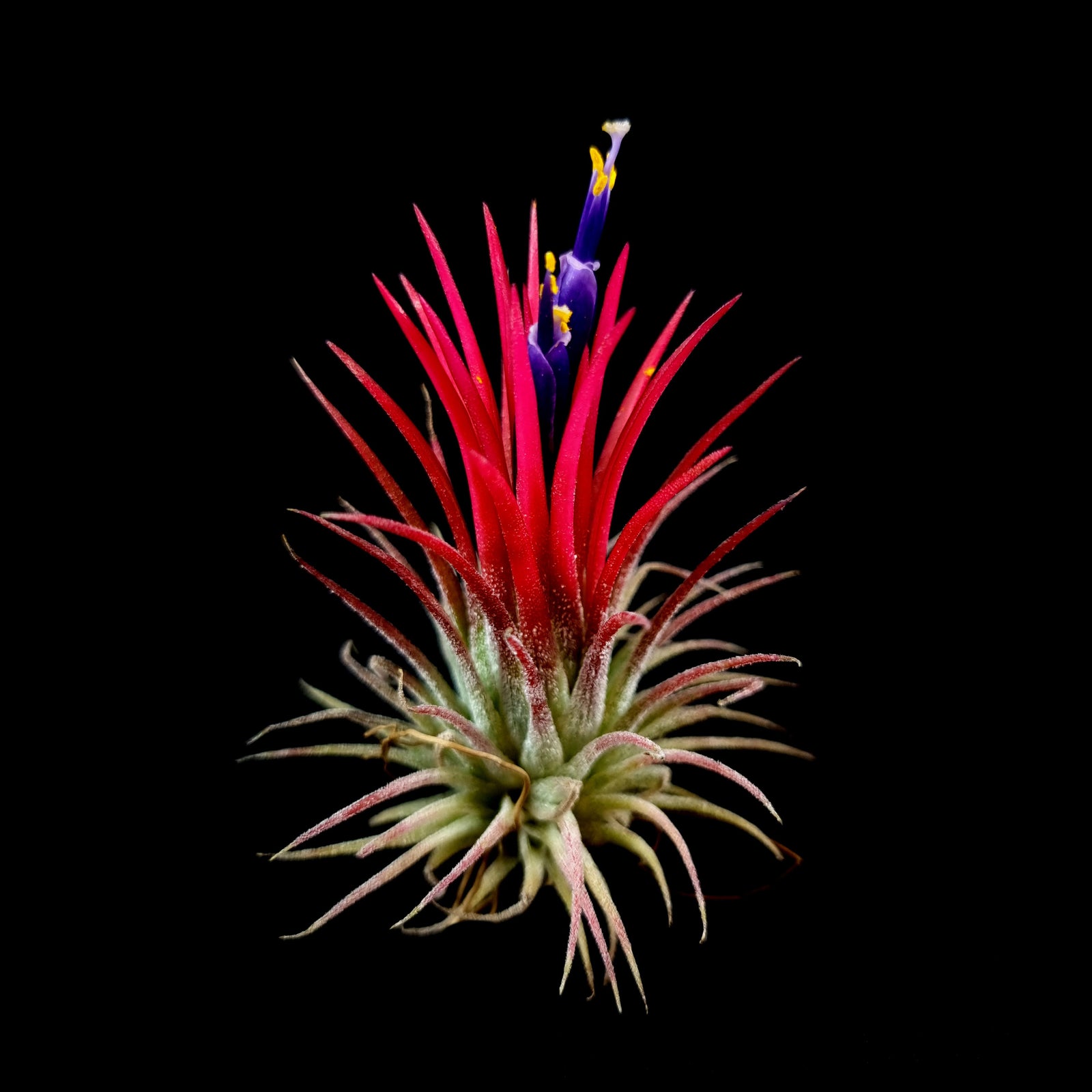
Tillandsia ionantha ‘Fuego’ develops a strong red to orange flush as it enters its flowering cycle. Violet tubular flowers then emerge from the centre of the rosette.
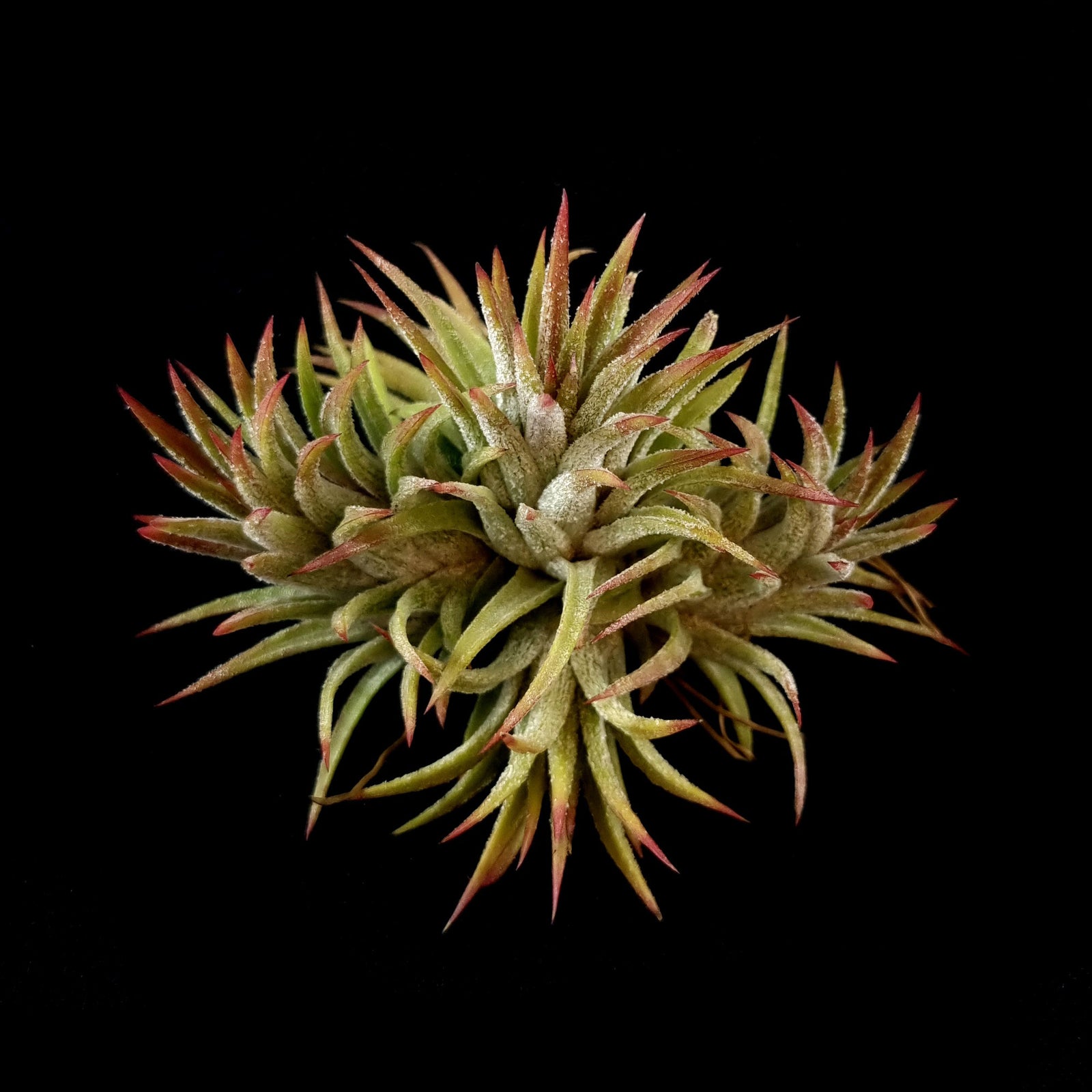
Tillandsia ionantha ex. Mexico also produces a vivid red blush around flowering, followed by violet flowers. Its compact growth and tendency to produce offsets make it well suited to developing into a clump.
Not every Tillandsia changes colour before flowering. Some remain silver or green and simply produce a spike or a small flower.
Why Do Tillandsia Change Colour Before Flowering?
The red, pink or orange colour seen in many flowering Tillandsia is commonly called blushing.
This colour change helps make the flowers more conspicuous to pollinators. It is a normal part of the flowering cycle and should not be confused with sunburn or disease.
Flowering colour is usually strongest when the plant has received suitable light during its development. A plant grown in deep shade may flower with less intense colour, while a plant moved suddenly into harsh sunlight may develop genuine leaf damage rather than a healthy blush.
A flowering blush normally:
- Develops around the centre of the plant
- Appears as flowering approaches
- Accompanies a bud or emerging flower
- Follows the natural shape of the healthy leaves
Sunburn is more likely to produce irregular bleached, tan or brown patches on the side receiving the strongest exposure.
How Long Do Air Plant Flowers Last?
The lifespan of a Tillandsia flower depends on the species.
Some individual flowers remain open for only a day or two. Other species produce several flowers in succession, extending the display over a number of days or weeks. Large inflorescences and colourful bracts may remain attractive for considerably longer.
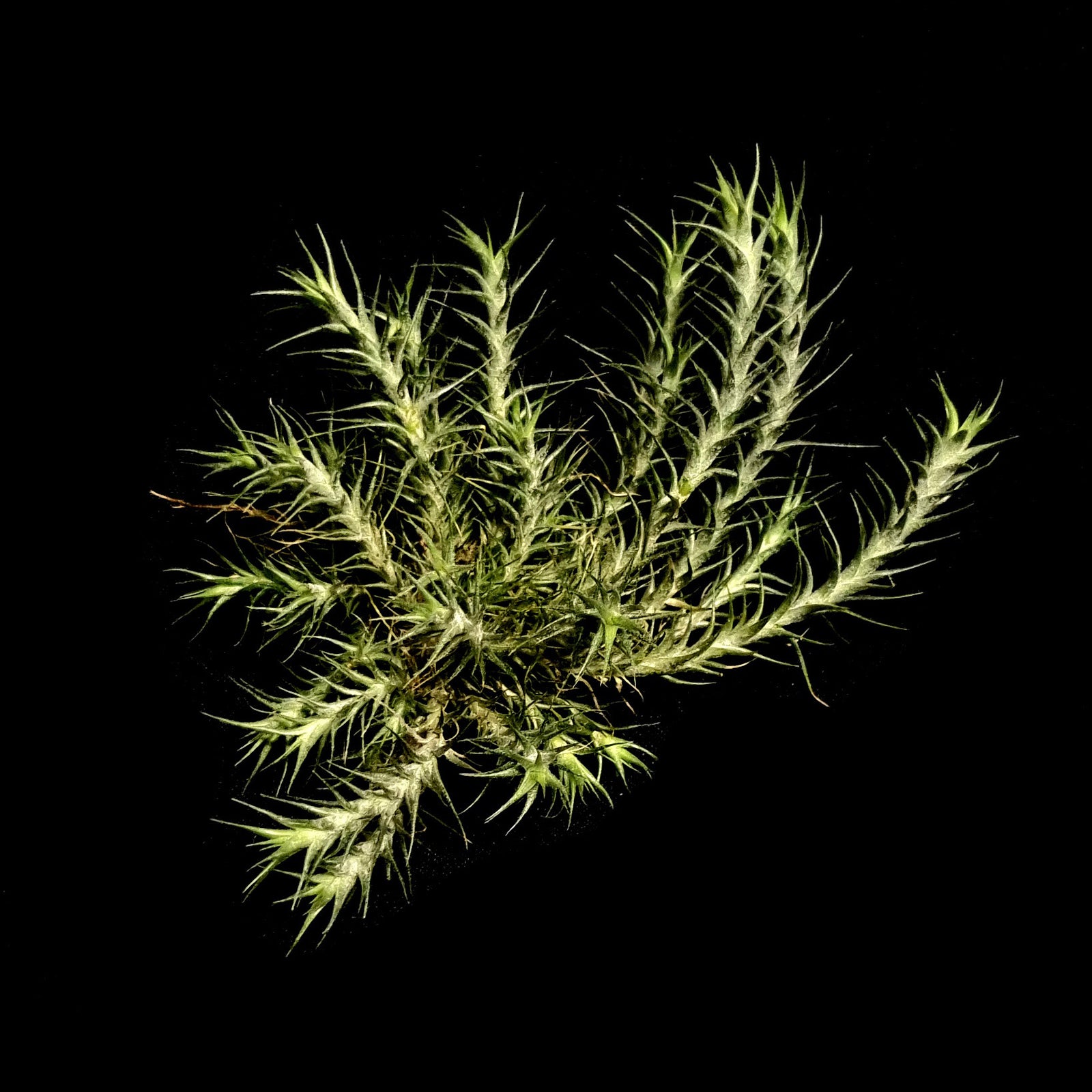
Small species can produce flowers that are both brief and easy to overlook. Tillandsia tricholepis, for example, produces tiny yellow to greenish-yellow flowers. They are individually brief but may appear sporadically as the plant continues its branching, trailing growth.
At the other end of the visual scale, a strongly coloured Tillandsia ionantha may attract attention before its actual flowers have opened because the central leaves have already changed colour.
Do Air Plants Die After Flowering?
Each individual Tillandsia rosette or growth point flowers only once. After flowering, that growth point gradually enters the final stage of its lifecycle.
This process is called monocarpic growth. It does not usually mean that the plant collapses immediately after flowering.
A healthy mother plant may remain alive for many months while producing and supporting pups. Depending on the species and growing conditions, the decline can be so gradual that it is barely noticeable.
During this period, the mother plant may:
- Produce one or more pups
- Retain most of its foliage
- Lose its flowering colour gradually
- Develop dry lower leaves
- Continue supporting the developing offsets
Caulescent and clumping species can appear to continue indefinitely because they contain multiple growing points at different stages. One growth may flower while the rest of the clump continues developing.
What Are Air Plant Pups?
Pups are vegetative offsets produced by the parent Tillandsia. They are genetically identical to the mother plant and develop into new growths capable of flowering when mature.
Pups commonly emerge:
- From the base of the mother plant
- Between lower leaves
- Along an elongated stem
- Before, during or after flowering
Many people first notice pups after the flower has faded, but some Tillandsia begin offsetting well before their first visible bloom.
The position and number of pups vary between species. Compact rosette-forming plants often produce offsets around the base. Stem-forming species may produce new growth along the length of the plant.
How Many Pups Will an Air Plant Produce?
There is no fixed number. A Tillandsia may produce one pup, several pups or a succession of new growths over time.
The number and vigour of the pups are influenced by:
- The species or cultivar
- The maturity and health of the mother plant
- Light levels
- Water and airflow
- Temperature
- Nutrition
A well-grown plant is generally better able to support multiple offsets, but excessive fertiliser will not force a weak plant to produce healthy pups.
Should You Remove Air Plant Pups?
You do not have to separate the pups. In many cases, leaving them attached produces a fuller and more impressive plant.
There are two valid approaches:
Leave the Pups Attached
Leaving pups attached allows them to continue drawing support from the mother plant. Over time, the plant develops into a natural clump containing growths at different ages.
This is particularly effective with compact Tillandsia ionantha forms. As successive generations grow and flower, the clump becomes larger and may eventually carry several flowering rosettes.
Stem-forming species also benefit from being left intact. Tillandsia tricholepis naturally produces shoots along branching stems, gradually forming a cascading chain or mat. Separating every new growth would prevent the plant from developing its characteristic form.
Separate the Pups
Separating pups allows them to be grown as individual plants. This may be useful when:
- You want to propagate several separate plants
- The clump has become too dense
- Air circulation through the clump is becoming restricted
- The mother plant has completely dried
- The mount no longer has enough room for new growth
Separation is optional rather than essential. A healthy clump does not need to be divided simply because pups have appeared.
When Should Tillandsia Pups Be Separated?
Wait until a pup is at least one-third the size of the mother plant. Allowing it to reach approximately half the size of the parent gives it an even stronger start.
Very small pups can sometimes survive separation, but they dry rapidly and have fewer reserves. Leaving them attached for longer is usually safer.
A pup is more likely to be ready when:
- It has developed a recognisable rosette or stem
- Its leaves are firm and actively growing
- It can be handled without holding the delicate centre
- Its connection to the mother plant can be seen clearly
Some slow-growing collector species require patience. Tillandsia tectorum ‘Filiform’ produces slender leaves covered with dense white trichomes and may form pups after flowering. These should be allowed to mature before separation, particularly because small offsets can be slow to establish.
How to Separate an Air Plant Pup
Examine the connection between the pup and the mother plant before attempting to separate them.
- Wait until the pup is large enough to handle safely.
- Hold the mother plant near its base rather than by the leaf tips.
- Support the pup close to its point of attachment.
- Ease the pup gently away with a controlled twisting movement.
- If it does not release easily, use a clean, sharp blade rather than tearing it.
- Allow any cut surface to dry before the plant is watered again.
Do not pull on the centre of the pup. Damage to the central growing point can stop further development.
If the connection is difficult to see or the pup feels firmly attached, leave it longer. There is no advantage in forcing an early separation.
How to Care for Tillandsia Pups
Young pups require the same basic conditions as mature Tillandsia, but they can dry more quickly because of their small size.
Provide:
- Bright, filtered light
- Regular moisture appropriate for the species
- Good air movement
- Protection from harsh afternoon sun
- Protection from frost and extreme heat
- Weak fertiliser only during active growth
Water pups thoroughly enough to hydrate them, then allow them to dry. Do not compensate for their small size by keeping them constantly wet.
Pups left attached to the mother plant are usually easier to establish because the parent continues supporting them during their early development.
Should You Remove the Dead Flower Spike?
A spent flower spike can be left in place until it has dried. It does not need to be removed immediately.
Once the spike is completely dry, it can be trimmed close to its base using clean scissors. Avoid cutting into the surrounding leaves or any emerging pups.
Removing a green or partly active inflorescence too early provides little benefit. Some Tillandsia produce flowers successively, and a spike that appears finished may still hold unopened buds.
The old flower spike does not need to be pulled out. Pulling can damage the centre of the plant.
Why Has My Air Plant Not Produced Pups?
Pups may not appear immediately after flowering. Some plants begin offsetting quickly, while others take weeks or months.
Possible reasons for slow pup development include:
- The plant has only recently finished flowering
- Growth has slowed during winter
- The plant is receiving insufficient light
- The plant is dehydrated or otherwise stressed
- The species is naturally slow-growing
- Small pups are hidden between the lower leaves
Continue providing normal care and inspect the base gently. Do not remove healthy lower leaves simply to search for pups.
Why Is the Mother Air Plant Turning Brown?
A gradual decline after flowering is normal. The oldest leaves may dry first while the pups continue to grow.
Normal post-flowering decline is generally:
- Slow
- Dry rather than mushy
- Accompanied by developing pups
- Concentrated in the oldest parts of the mother plant
Rot is different. A black, soft or foul-smelling centre is not a normal part of flowering. Rapid collapse and central leaves pulling out easily indicate a moisture or health problem.
For help distinguishing normal ageing from rot, see our guide to why air plants turn brown, black or soft.
Can You Encourage an Air Plant to Flower?
A Tillandsia must reach sufficient maturity before it can flower. The time required varies from a few years in faster species to considerably longer in slow-growing plants.
Healthy flowering is supported by:
- Bright light appropriate for the species
- Regular watering followed by complete drying
- Good airflow
- Suitable seasonal temperatures
- Weak fertiliser during active growth
Insufficient light is a common reason that an otherwise healthy Tillandsia continues growing without flowering.
Do not respond by moving a shade-grown plant directly into harsh sunlight. Increase the light gradually to prevent burning the leaves.
Heavy fertilising will not safely force an immature plant to bloom. Excess fertiliser is more likely to damage the foliage and growing point.
Can Air Plants Be Grown From Seed?
Yes. Tillandsia can reproduce sexually through seed as well as vegetatively through pups.
After successful pollination, a seed capsule develops. When mature, it opens and releases lightweight seeds carrying fine, silky hairs that help them disperse.
Growing Tillandsia from seed is much slower than propagation from pups. Seedlings are extremely small and require careful control of moisture, airflow, light and cleanliness. They may take several years to reach a substantial size.
Seed propagation is worthwhile for breeding and conservation, but pups are the simplest and most reliable method for most home growers.
Frequently Asked Questions
Do all air plants die after flowering?
Each individual rosette or growth point flowers once and then gradually declines. The plant usually produces pups, allowing the same genetic plant to continue as new growth.
How long does an air plant live after flowering?
The mother plant may remain alive for many months after flowering. The timing varies according to the species, plant health and growing conditions.
Do air plants always produce pups?
Healthy Tillandsia usually produce offsets, but the number and timing vary. Some produce a single pup, while others develop several or continue branching along a stem.
When should I remove an air plant pup?
Wait until the pup is at least one-third the size of the mother plant. Approximately half the parent’s size is safer for slow-growing or delicate plants.
Will an air plant pup flower?
Yes. Once the pup reaches maturity, it can produce its own flower and another generation of offsets.
Should I remove the mother plant when it turns brown?
Remove only material that is completely dry and no longer supporting the pups. Do not pull away a mother plant that remains firm or is still connected strongly to developing offsets.
Can I leave all the pups attached?
Yes. Leaving pups attached creates a natural clump and often produces a stronger display than dividing every new growth.
Why did my air plant turn red?
Many Tillandsia blush red, pink or orange as they approach flowering. If the colour is centred around healthy new growth and accompanied by a bud, it is probably a normal flowering response.
Flowering Is a Transition, Not an Ending
A flowering Tillandsia has reached maturity. The bloom may be brief, but the next stage can continue for years as pups develop into a larger clump.
Leave young offsets attached until they are well established, continue caring for the mother plant and avoid removing anything that remains green and firm.
For general advice about watering, light, temperature and airflow, read our complete Air Plant Care Guide.
For more detailed watering information, see How Often Should You Water Air Plants in Australia?
You can also explore our current collection of Tillandsia and air plants available online in Australia.